Case Study · Parametric Architecture

Tidal House

A personal exploration of parametric residential design — and the workflow breakthrough that made it possible.
The Problem

Organic architecture resists consistency. Every generation was beautiful but different — curves shifted, proportions drifted, details refused to lock. The more complex the form, the harder it became to maintain a coherent design across multiple views.

This is the challenge with parametric visualization: how do you explore a building that doesn't exist yet without losing it between frames?

The Breakthrough

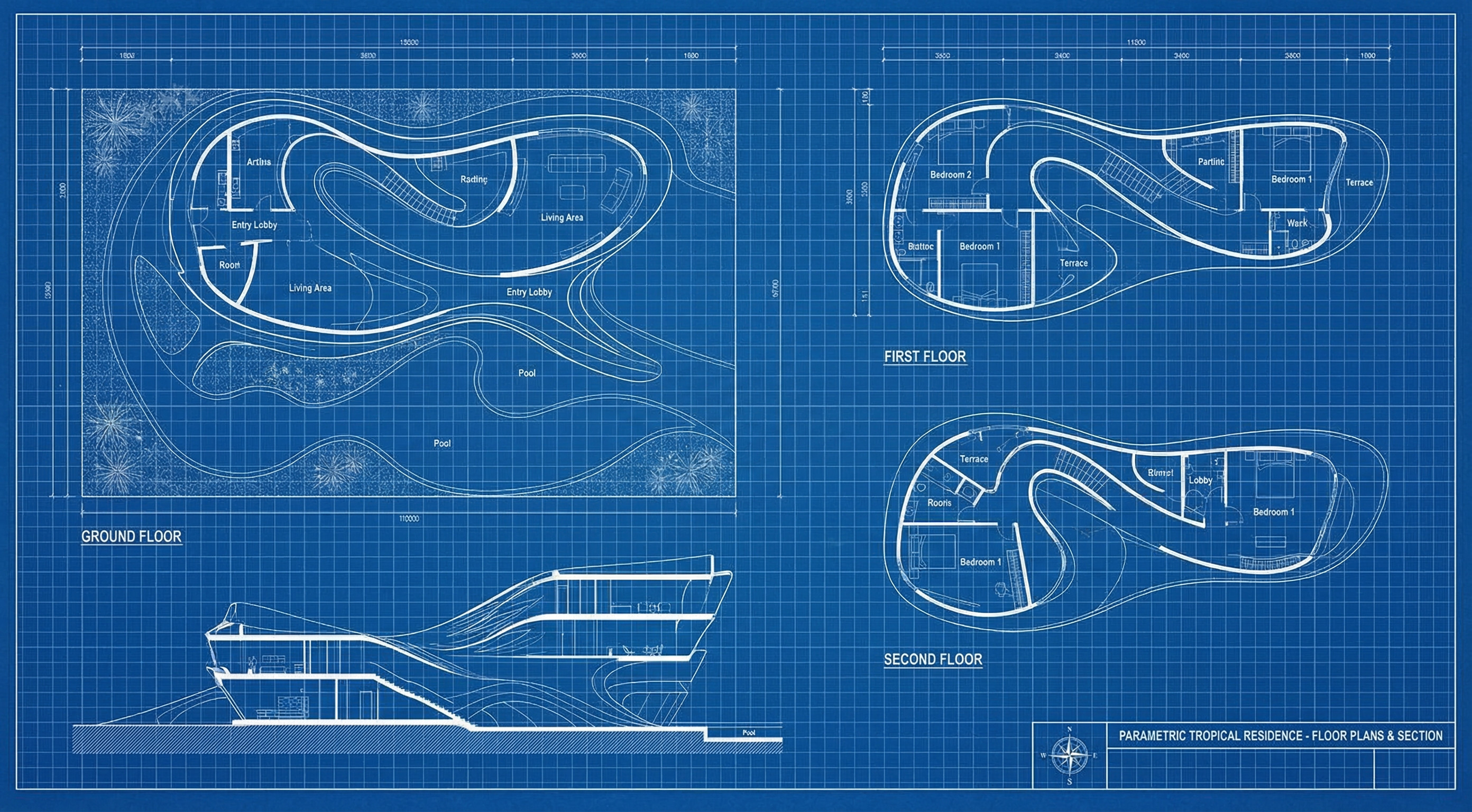
Work backwards. Instead of generating exteriors and hoping for consistency, start with the source of truth: the blueprint.

Once the floor plans and section were locked, every subsequent image — exteriors, interiors, aerials — could reference the same architectural DNA. The design stopped drifting.

Tidal House floor plans and section
The source of truth — floor plans and section that anchored every visualization.

Exterior Views

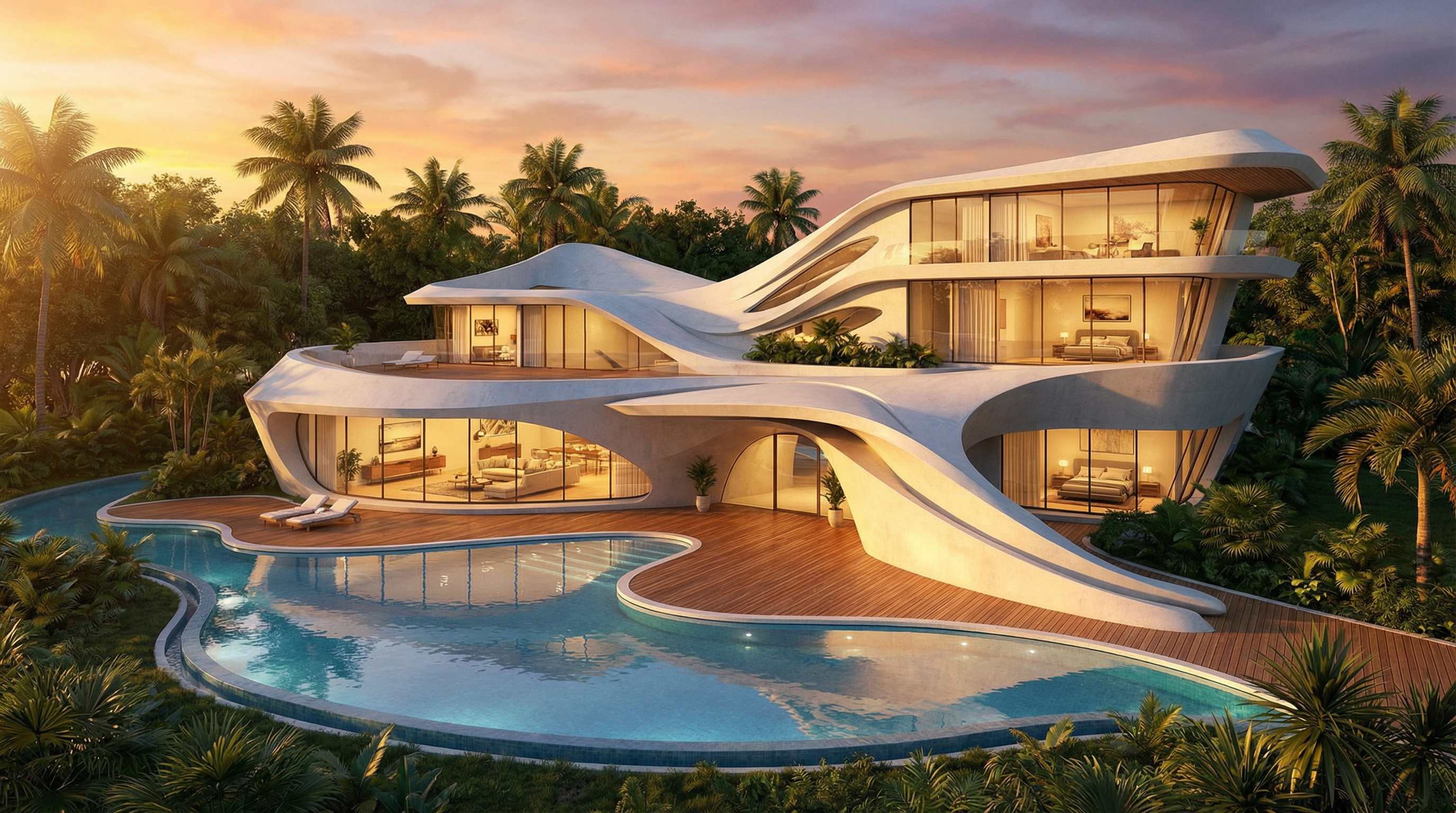
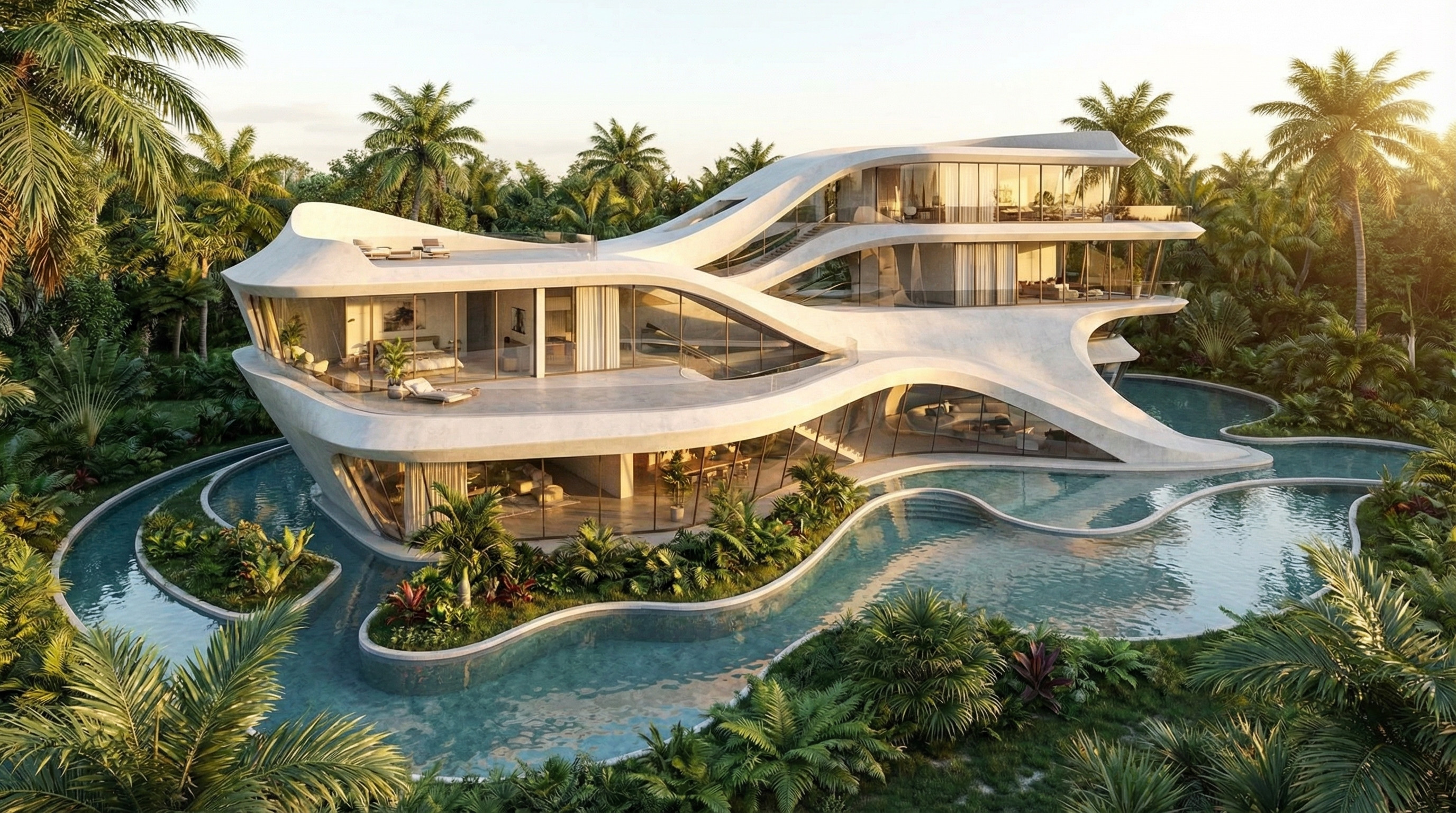
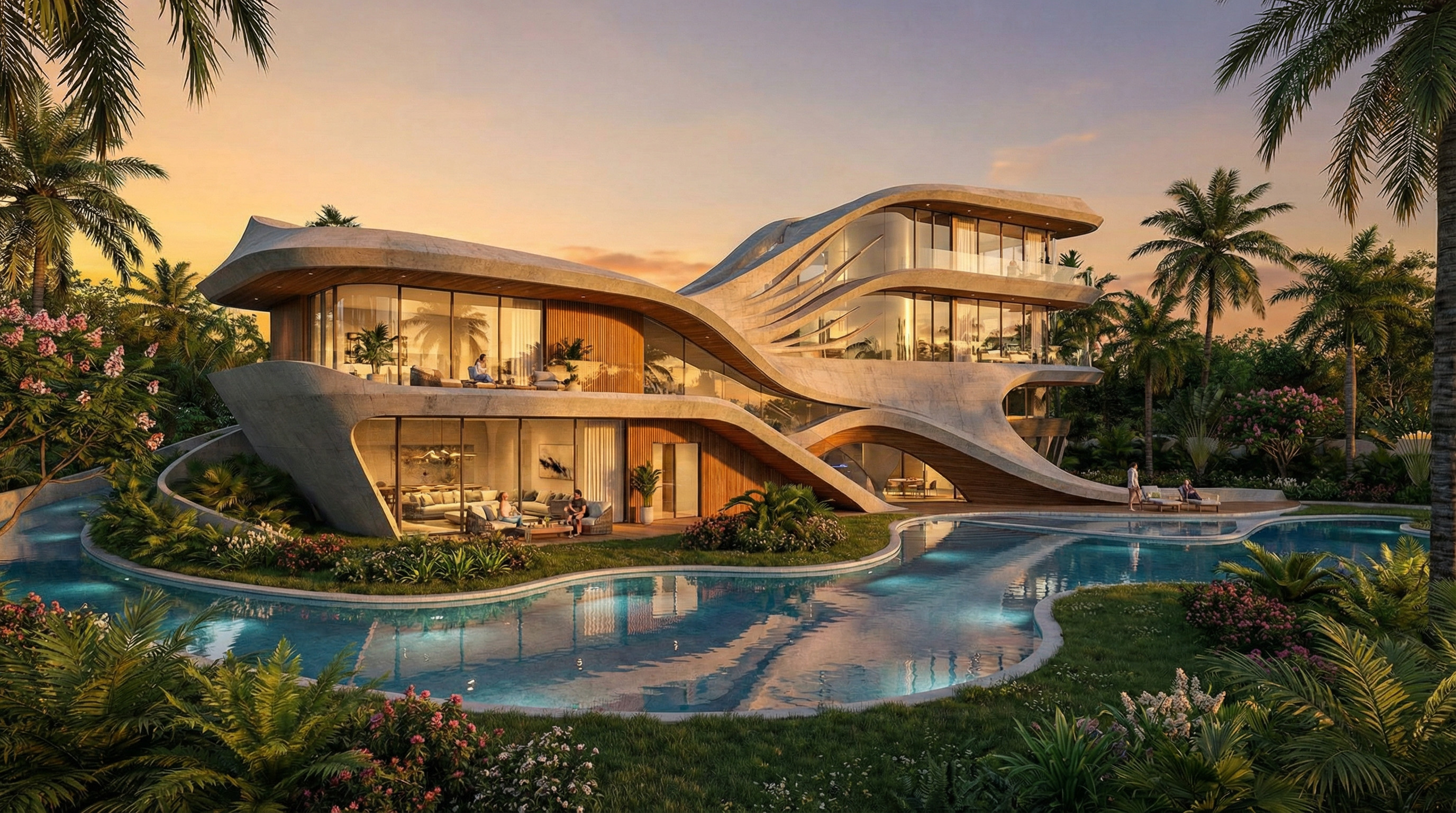
With the blueprint as reference, the exterior visualizations locked into place. The sculptural concrete shell, integrated LED edge lighting, and floor-to-ceiling glass became consistent across every angle.

Tidal House front exterior
Front approach
Tidal House deck view
Pool deck perspective

Interior Spaces

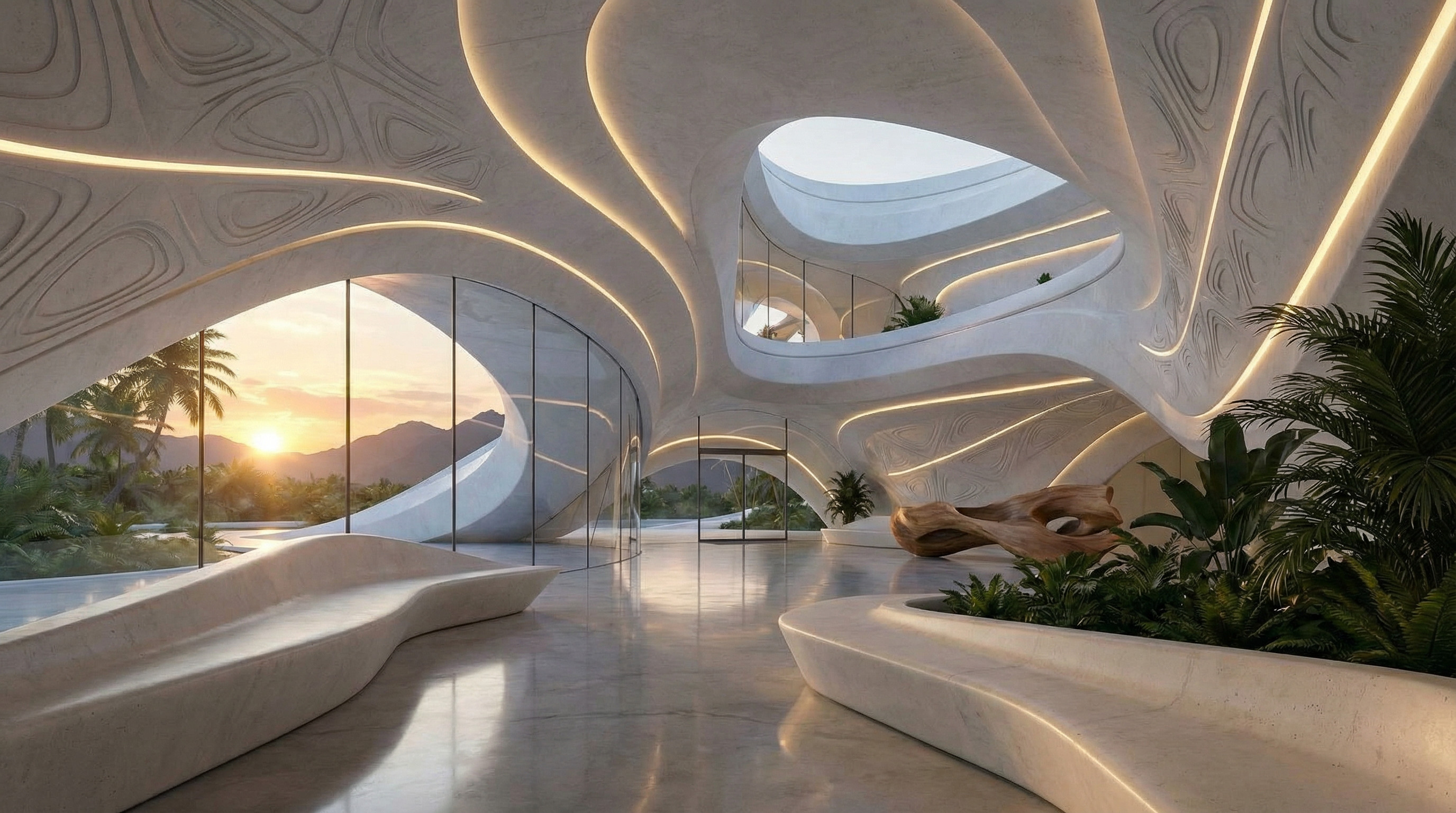
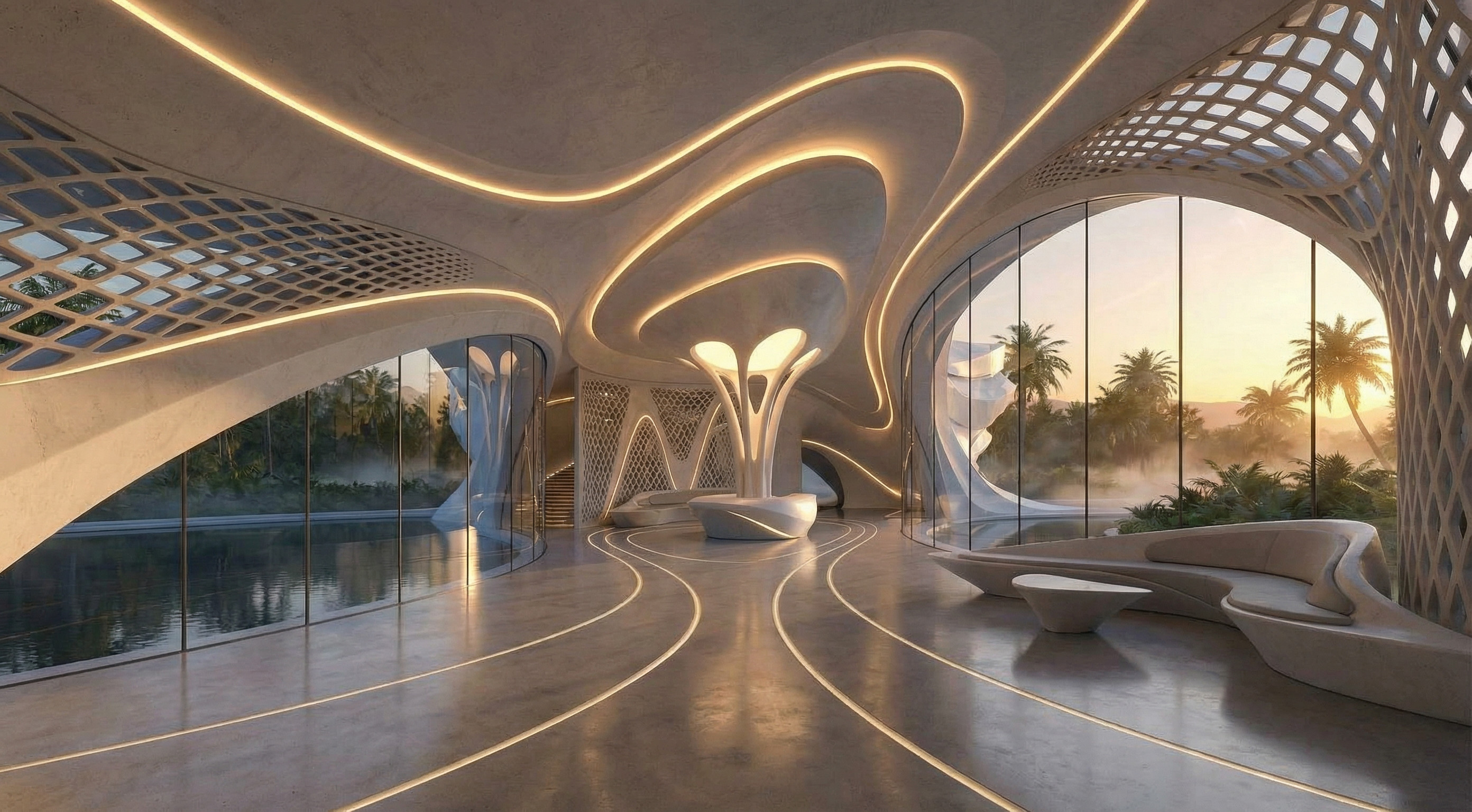
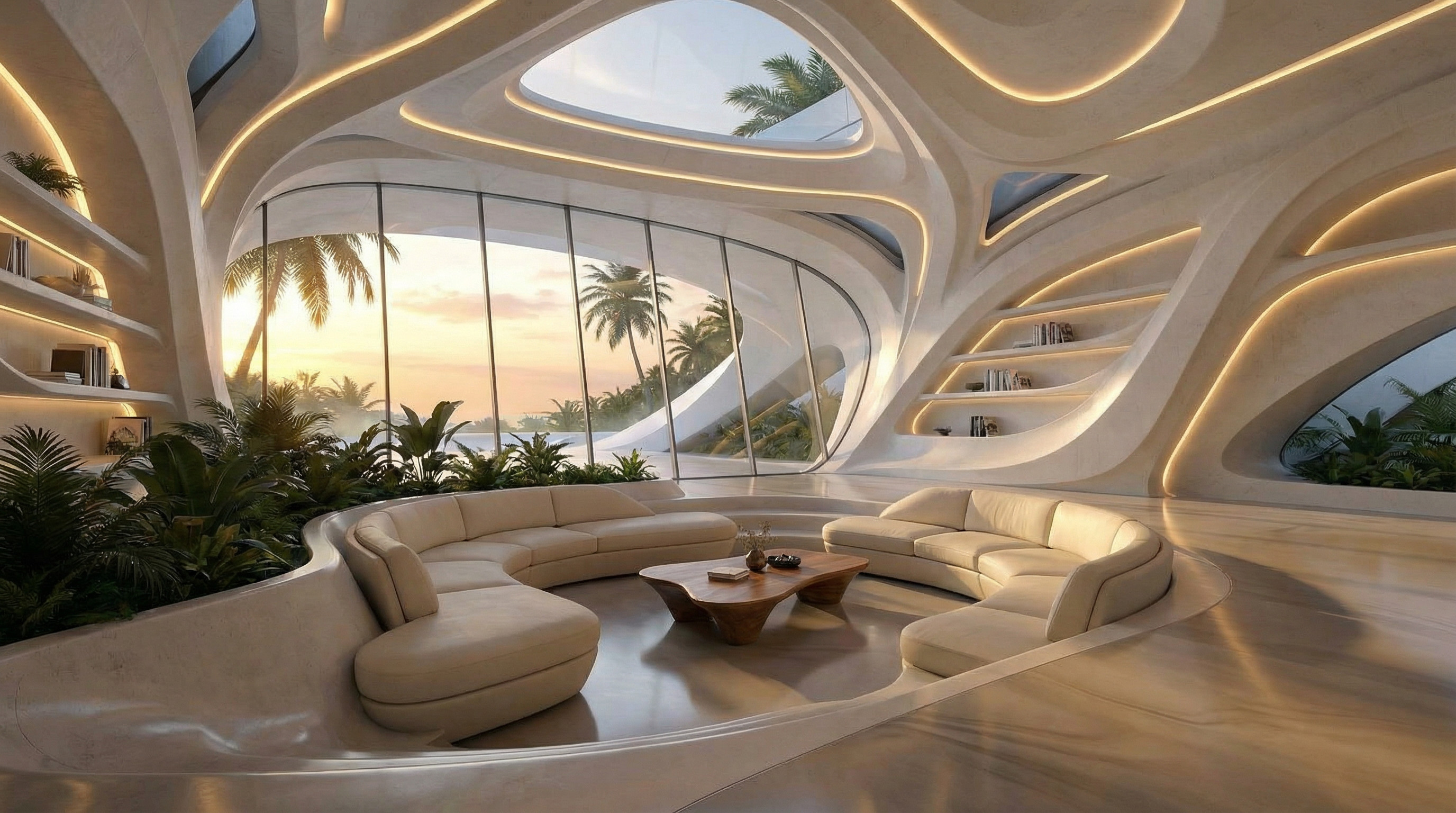
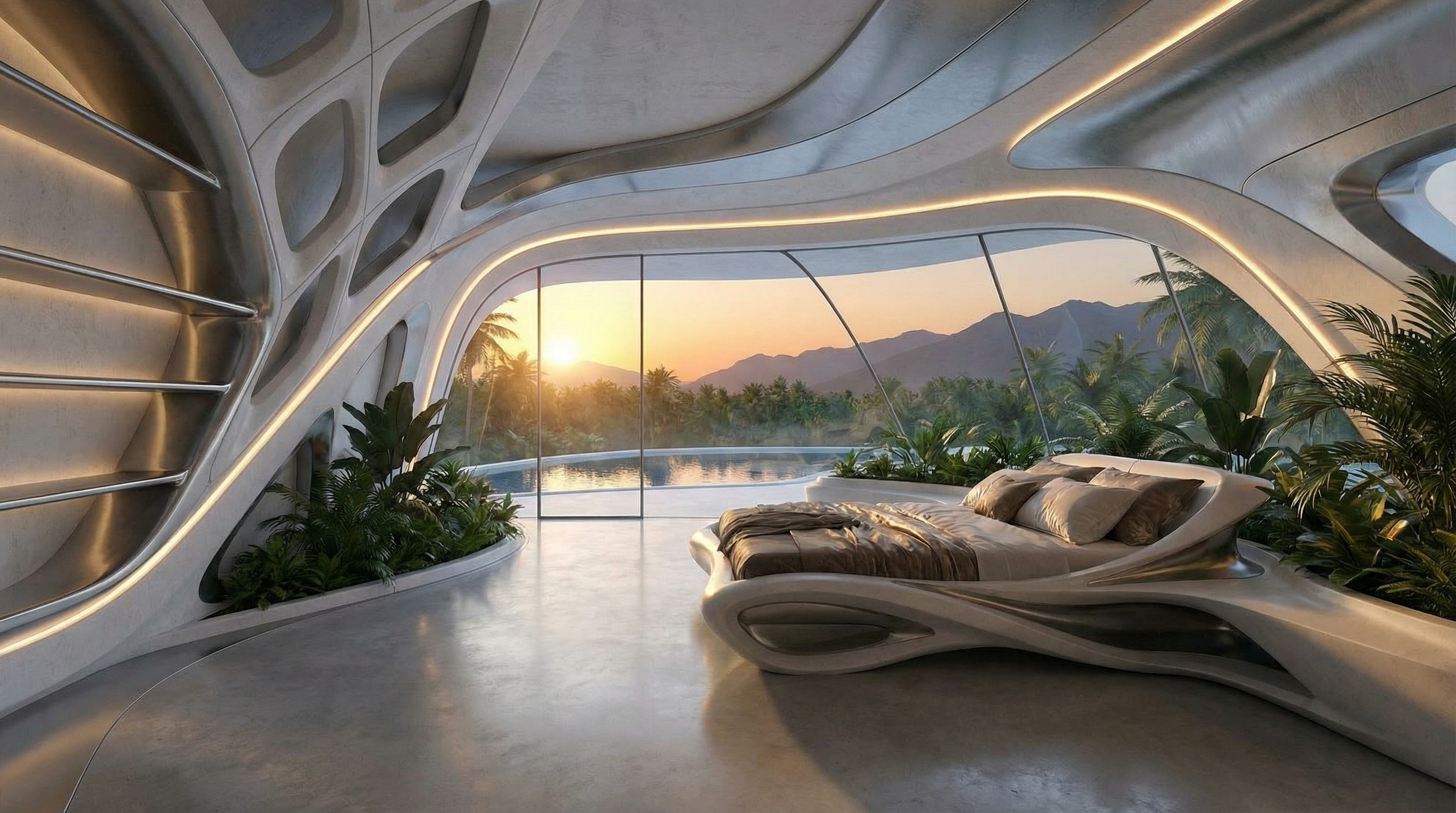
The interior language follows the exterior — continuous curves, integrated planters, furniture that emerges from the architecture itself. No sharp corners. Every element flows.

Tidal House entry lobby
Entry lobby
Tidal House lattice structure
Lattice pavilion
Tidal House living room
Living room
Tidal House master bedroom
Master bedroom

The Sculptural Footprint

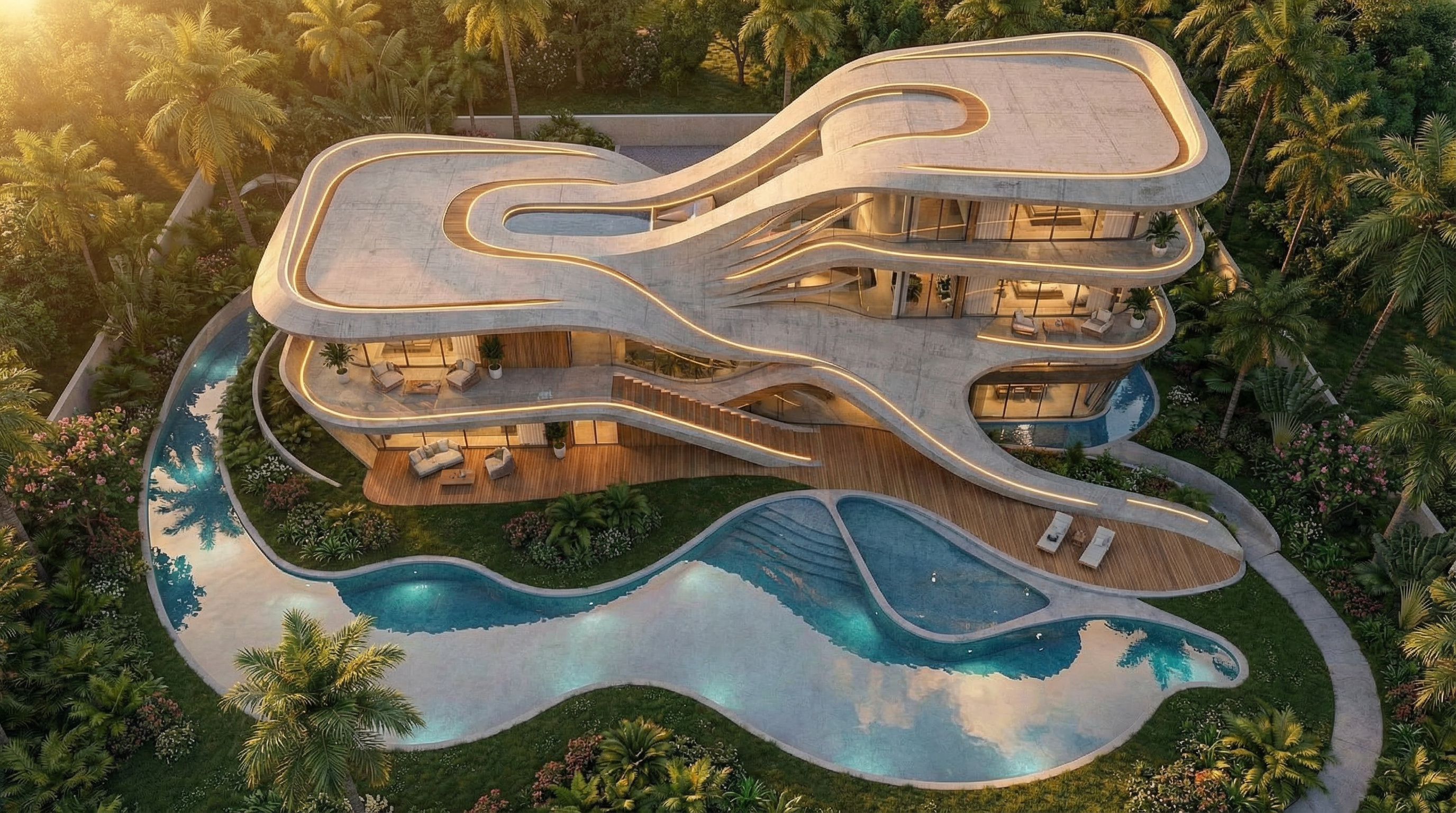
From above, the design reads as landscape — the lagoon pool wrapping the structure, pathways flowing outward into the tropical site. Architecture and environment become inseparable.

Tidal House aerial view
Aerial view at dusk — structure and landscape as one continuous form.

The Approach

A cinematic flyover of the completed concept — from aerial survey to arrival.

Conceptual Cost Analysis

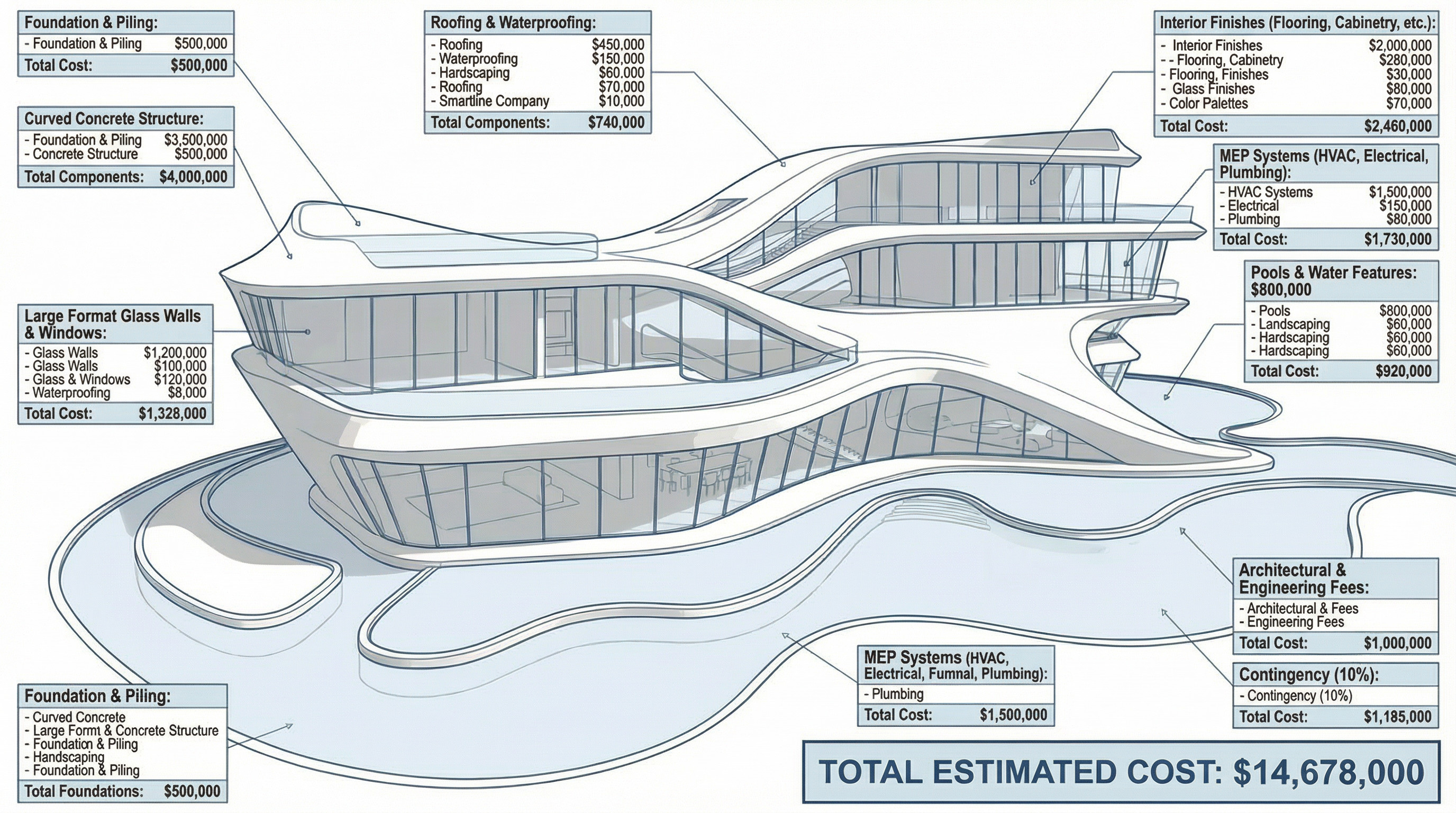
Visualization is only part of the story. To make early-stage decisions, developers need numbers — even rough ones. This conceptual cost breakdown translates the design into actionable budget ranges.

Tidal House cost itemization
CategoryEstimate
Foundation & Piling$500,000
Curved Concrete Structure$4,000,000
Glass Walls & Windows$1,328,000
Roofing & Waterproofing$740,000
Interior Finishes$2,460,000
MEP Systems$1,730,000
MEP Infrastructure$1,500,000
Pools & Water Features$920,000
Architectural & Engineering$1,000,000
Contingency (10%)$1,185,000
Total Estimated Cost$14,678,000

Conceptual estimate for visualization purposes. Based on 2025 USD for luxury coastal construction.

What This Means

This isn't a building. It's a complete pre-development visualization package — the kind of deliverable that lets developers pitch investors, test market interest, and make go/no-go decisions before committing to CAD.

Blueprint. Exteriors. Interiors. Aerial. Budget. All consistent. All from the same source of truth.

Some ideas need to be seen before they can be built.

Complete architectural concept visualization. Blueprint-driven consistency across exteriors, interiors, and aerial views. Conceptual cost analysis for early-stage decision making. Personal exploration turned production workflow.